Article Writing With AI in 2026: Why Ranking Isn’t the Goal Anymore
Search is not what it used to be. In 2026, most people don’t scroll through ten blue links anymore. They ask ChatGPT a question. They open Google and read the AI Overview at the top. They ask Perplexity to compare options and pick one.
This changes how you should write.
For years, SEO writers had one goal: rank on page one. That goal still matters. But there’s a new goal sitting next to it, and most writers haven’t caught up yet. That goal is AI visibility. It means your content gets picked, quoted, and cited by AI tools when someone asks a question your content answers.
Ranking gets you clicks. AI visibility gets you mentioned even when no one clicks at all.
What Changed in Search
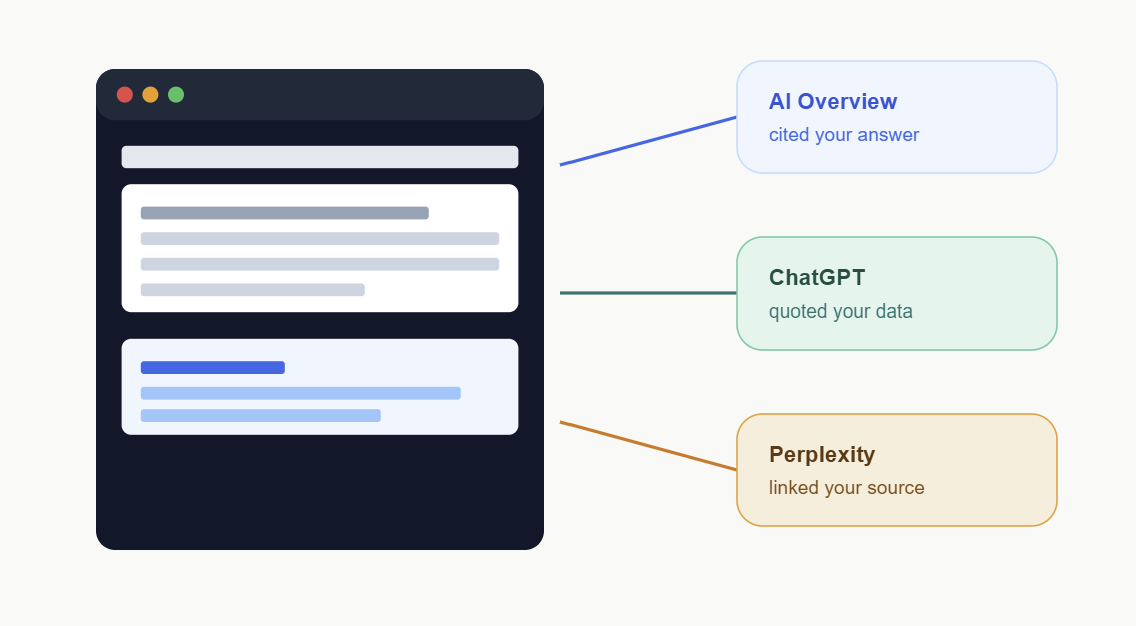
Google added AI Overviews to search results. ChatGPT added live web search. Perplexity built its entire product around this idea. All three do the same basic thing: they read many web pages, pull out the useful parts, and hand the user a short answer.
If your article is the source behind that answer, you win, even without a click. Your brand name shows up. Your website gets referenced. People trust the answer more because a real site backed it.
If your article isn’t structured in a way AI tools can use, it gets skipped. It might still rank fine on Google. It just won’t get quoted by the AI layer sitting on top of search.
This is the gap most content still has in 2026.
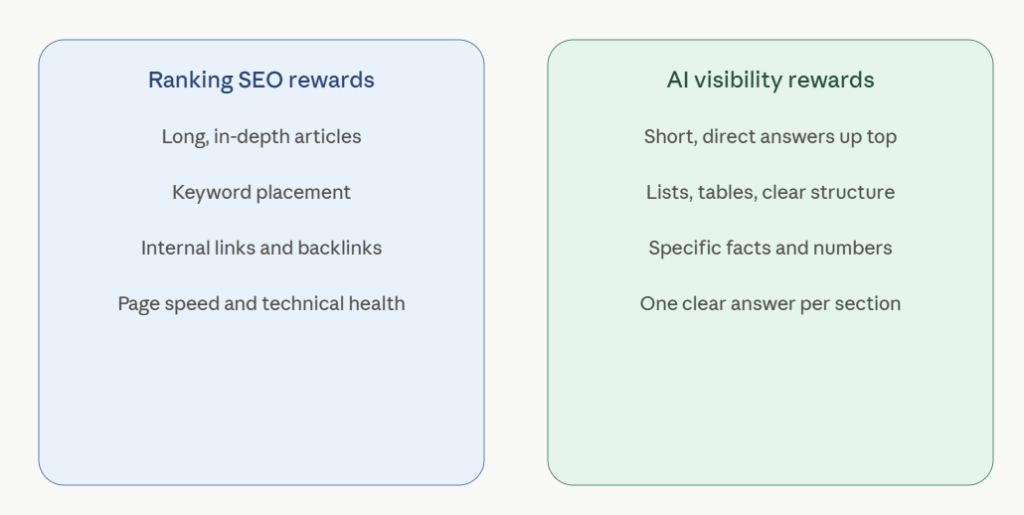
Ranking SEO vs. AI Visibility: What’s Different
Both approaches care about good writing and real answers. But they reward different habits.
Ranking SEO rewards:
- Long articles that cover a topic in depth
- Keyword placement in headings and body text
- Internal linking and backlink authority
- Page speed and technical health
AI visibility rewards:
- Short, direct answers near the top of the page
- Clear structure the AI can lift cleanly (lists, definitions, tables)
- Specific facts and numbers instead of vague claims
- Content that answers one question fully, without padding
You still need the ranking basics. But if you stop there, you’re writing for 2020, not 2026.
How to Write an Article AI Tools Want to Cite
1. Answer the question in the first two sentences
AI tools scan for a direct answer near the top of the page. If your article opens with three paragraphs of backstory before it gets to the point, the AI often skips it and finds a competitor who answered faster.
Start with the answer. Explain the “why” after.
2. Use real numbers, not vague words
“Significant growth” tells an AI nothing it can quote. “Traffic grew 160% in three months” is something it can lift word for word into an answer.
Every claim in your article should be checkable. Vague adjectives get ignored. Specific facts get cited.
3. Structure content so it can be lifted in pieces
AI tools pull small chunks of text, not whole articles. A clean list, a short definition, or a simple table gets extracted more easily than one long paragraph.
Break your article into small, self-contained pieces. Each section should make sense on its own, even if someone only reads that one part.
4. Write one clear answer per section
Don’t mix three ideas into one paragraph. AI tools struggle to pull a clean quote out of a paragraph that’s doing too much. One idea, one section, one clear point.
5. Add a short FAQ block
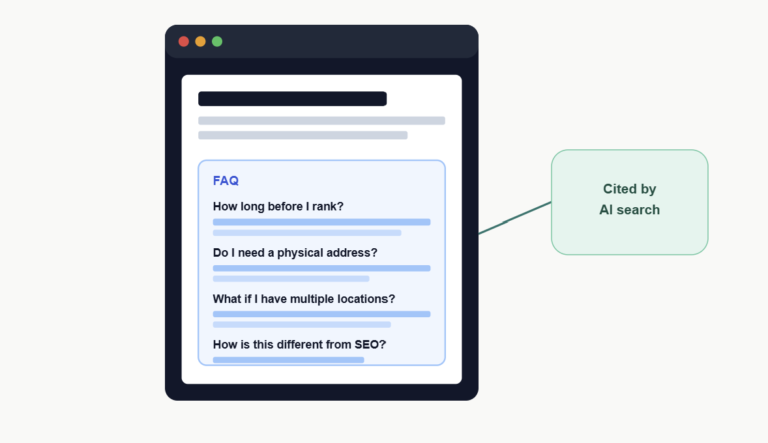
FAQ sections are one of the easiest ways to get cited. Each question and answer pair is already the exact shape an AI tool needs: a clear question, a short direct answer. Keep each answer to two or three sentences.
6. Back up claims with sources
AI tools favor content that shows its work. Linking to real data, studies, or original reporting builds trust signals that both Google and AI systems can recognize.
7. Keep sentences short and plain
This isn’t just for readability. Shorter, plainer sentences are easier for AI models to parse and quote accurately. Long, complex sentences get paraphrased, sometimes incorrectly. Short sentences get quoted directly.
Does This Still Help With Google Rankings?
Yes. Google’s own guidance has said for years that content should be written for people first, answer the search intent clearly, and avoid filler. Everything above does exactly that. A clear, well-structured, fact-based article is good for readers, good for Google, and good for AI tools at the same time.
There’s no real conflict between the two goals in 2026. Writing badly for AI visibility (thin content, no depth, no original insight) will hurt your Google rankings too. The two systems have converged on rewarding the same thing: clear, useful, well-organized answers.
What AI Visibility Does Not Mean
It does not mean stuffing keywords. It does not mean writing shorter articles just to seem “scannable.” It does not mean skipping depth.
Long, thorough articles still perform well, as long as they’re structured so an AI system can find the specific answer inside them. Depth and structure aren’t opposites. The best-performing articles in 2026 have both: real depth, organized in a way that makes each individual answer easy to extract.
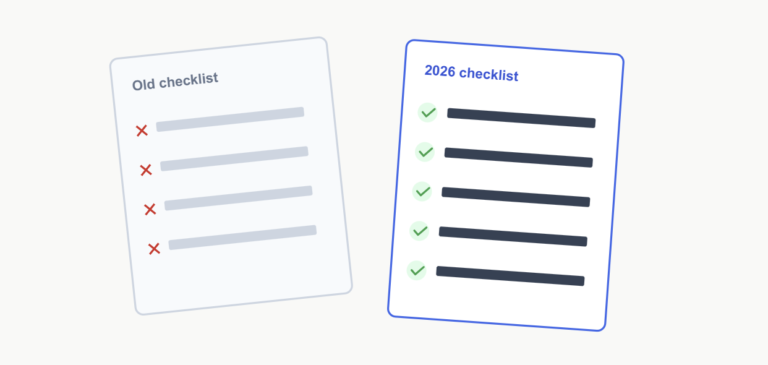
A Simple Checklist Before You Publish
- Does the first two sentences answer the main question?
- Are there specific numbers instead of vague claims?
- Is the article broken into short, focused sections?
- Is there an FAQ block with direct answers?
- Are claims backed by a real source or data point?
- Are sentences short enough to quote cleanly?
If an article checks all six boxes, it’s built for both search engines and AI answer engines, not just one or the other.
The Bottom Line
Ranking on Google still matters. But in 2026, it’s only half the job. The other half is making sure AI tools can read your article, trust it, and quote it when someone asks a related question.
The businesses that adapt to this now will show up in ChatGPT answers, AI Overviews, and Perplexity results months before their competitors catch on. The ones that keep writing only for rankings will still get some traffic. They just won’t be part of the conversation happening inside AI search.