
SEO Audit Priorities: What to Fix First
A full SEO audit can surface 50, 100, sometimes 200 individual issues. Most site owners look at that list and freeze. Not every issue deserves the same urgency, and treating them all equally usually means the highest-impact fixes get buried under a pile of minor ones.
Here’s how to sort a real audit report into what actually needs fixing first.
Why Priority Order Matters More Than the Full List
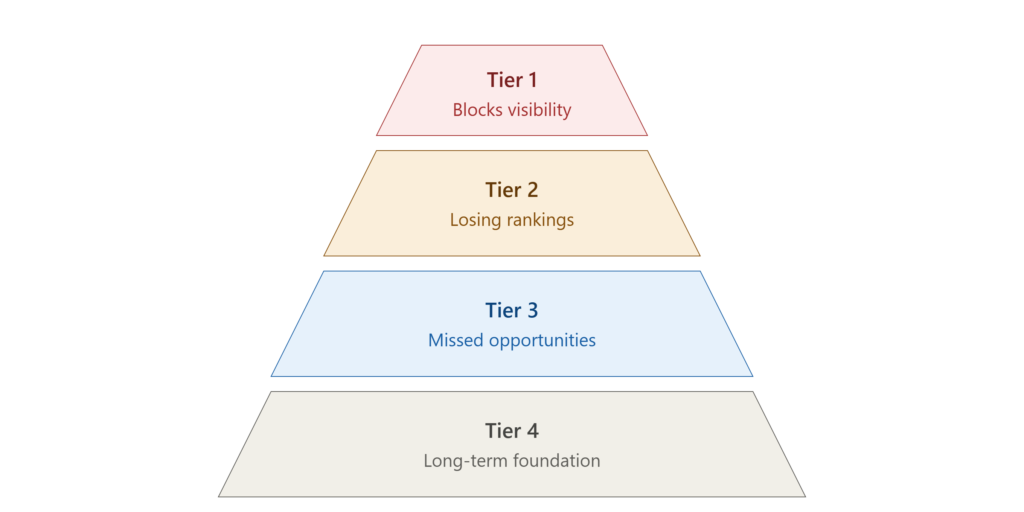
Two sites can have the exact same audit tool, run on the exact same day, and get wildly different results from fixing their issues, purely because of the order they worked through them in. Fixing 30 minor issues before one major indexation blocker wastes weeks of potential traffic.
The goal of prioritization isn’t to ignore smaller issues forever. It’s to sequence the work so the biggest, fastest wins happen first, and the site starts recovering or growing while the smaller items get handled in the background.
Priority Tier 1: Issues That Block Visibility Entirely
These come first, always, no exceptions. If a page can’t be found or read by search engines, nothing else matters for that page.
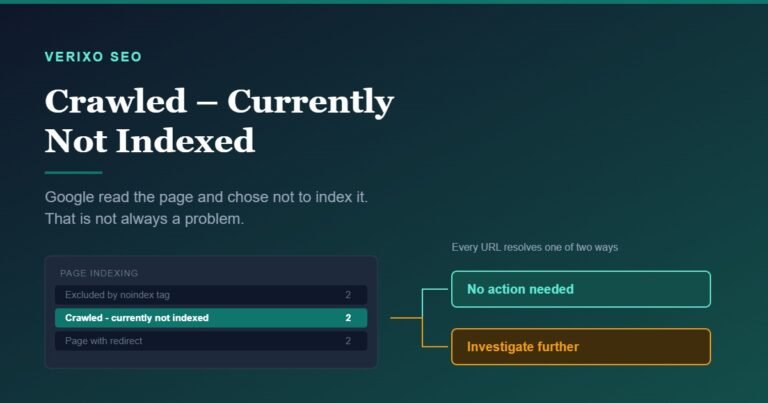
- Pages accidentally marked
noindex - Pages blocked in
robots.txtthat should be crawlable - A broken or missing XML sitemap
- Server errors (5xx) preventing pages from loading
- Major crawl budget waste from infinite URL parameters or duplicate paths
Why first: A page that Google can’t see or index earns zero traffic, regardless of content quality. Fixing this tier often produces the fastest, most visible traffic recovery of any audit finding.
Priority Tier 2: Issues Actively Losing Rankings or Traffic
These aren’t blocking visibility outright, but they’re actively working against the site’s performance.
- Core Web Vitals failing on high-traffic pages
- Duplicate or thin content competing against itself for the same keyword
- Missing or incorrect canonical tags causing indexation confusion
- Broken internal links on important pages
- Mobile usability failures on key landing pages
Why second: These issues actively suppress rankings the site should otherwise be earning. They’re not usually as catastrophic as Tier 1, but they compound over time if left alone.
Priority Tier 3: Missed Opportunities
These issues aren’t actively hurting the site. They’re leaving performance on the table that a competitor might be capturing instead.
- Missing or weak title tags and meta descriptions on important pages
- Missing structured data (schema) on eligible page types
- Thin internal linking between related content
- Missing or generic FAQ sections on service and product pages
- Underoptimized image alt text
Why third: Fixing these improves click-through rate, AI citation potential, and topical authority, but the site isn’t actively losing ground by leaving them for a few more weeks.
Priority Tier 4: Long-Term Foundation Work
These matter, but they’re ongoing investments rather than one-time fixes.
- Backlink profile building and authority growth
- Content refresh cycles for aging high-value pages
- Expanding topic coverage into adjacent keyword clusters
- Building out AI visibility signals (brand mentions, citations, entity building)
Why last (but never skipped): This is the work that compounds over months and years. It doesn’t produce an overnight fix, but a site that only ever does Tier 1 through 3 work eventually plateaus without this layer.
How to Sort Your Own Audit Report Into These Tiers
Most audit tools (Screaming Frog, Ahrefs, Search Console) list issues by severity label, but those labels don’t always match real business impact. A missing meta description on a low-traffic page is not the same priority as one on your highest-converting landing page.
A better sorting method:
- Cross-reference every issue against your top 20 pages by traffic or revenue. An issue on a top page always outranks the same issue on a page nobody visits.
- Group by tier using the categories above, not just by the tool’s default severity rating.
- Estimate rough effort next to rough impact. A Tier 1 fix that takes 10 minutes (removing a stray noindex tag) should happen before a Tier 2 fix that takes two weeks of dev time.
A Sample Priority Table
| Tier | Example issue | Typical fix time | Typical impact |
|---|---|---|---|
| 1 | Key pages accidentally noindexed | Minutes to hours | Immediate, often within days |
| 1 | Broken XML sitemap | Minutes | Faster re-crawling, days to weeks |
| 2 | Slow Core Web Vitals on top pages | Days to weeks | Gradual, 2 to 6 weeks |
| 2 | Duplicate content cannibalization | Days | Gradual, 4 to 8 weeks |
| 3 | Missing schema markup | Hours to days | Gradual, weeks to months |
| 3 | Weak meta descriptions | Hours | CTR improvement within days of re-crawl |
| 4 | Backlink authority building | Ongoing | Months |
| 4 | Content refresh program | Ongoing | Months |
What Google’s Guidance Suggests
Google has consistently said that crawlability and indexation are prerequisites, not optional enhancements. Their documentation on Core Web Vitals and page experience also frames those signals as directly tied to both rankings and user satisfaction, supporting why they sit in Tier 2 rather than Tier 3 or 4.
This lines up with the tiering above: the things Google treats as baseline requirements are the things that should be fixed first in practice, not just in theory.
A Quick Gut Check Before Starting Any Audit Fix
Before working on any single audit item, ask:
- Does this issue affect a page that already gets meaningful traffic or could soon?
- Is this actively blocking visibility, or just leaving upside on the table?
- How long will the fix take relative to its likely impact?
If the honest answer puts it in Tier 1 or 2, it goes to the top of the list, regardless of what order the audit tool originally presented it in.
The Bottom Line
A long audit report isn’t a to-do list to work through top to bottom. It’s a set of findings that need triage. Fix what’s blocking visibility first, then what’s actively losing ground, then what’s leaving opportunity on the table, and keep the long-term foundation work running in parallel the whole time.
Done in the right order, even a modest amount of audit work each month produces compounding results. Done in the wrong order, even a large amount of effort can sit for months without moving the numbers that matter.